Walking along a riverbank or staring at a freshly exposed cliff face brings a very specific kind of thrill. Millions of years of planetary history sit quietly in those layered bands of earth, waiting for an observant eye to notice a shape that does not quite belong among the surrounding minerals.
Most people walk past extraordinary prehistoric remains every single day, mistaking them for ordinary gravel or weathered stones. Learning to read the language of ancient sediments changes an ordinary walk outdoors into an archaeological treasure hunt where every outcrop tells a story.
Understanding Sedimentary Rock Formations
Life leaves its physical traces almost exclusively in sedimentary rock because these formations accumulate through the gentle settling of mud, sand, and calcium carbonate over vast stretches of time. Igneous rocks form from molten magma that destroys organic matter instantly, and metamorphic rocks undergo extreme heat and pressure that twists original structures beyond recognition.
Limestone, shale, and fine siltstone act as nature's ultimate preservation jars. As layers of sediment pile up on top of decaying shells, carapaces, or leaves, oxygen gets blocked out and slows down bacterial decay. Minerals slowly replace the original organic material molecule by molecule through a delicate process called permineralization.
Spotting Trilobites and Ammonites
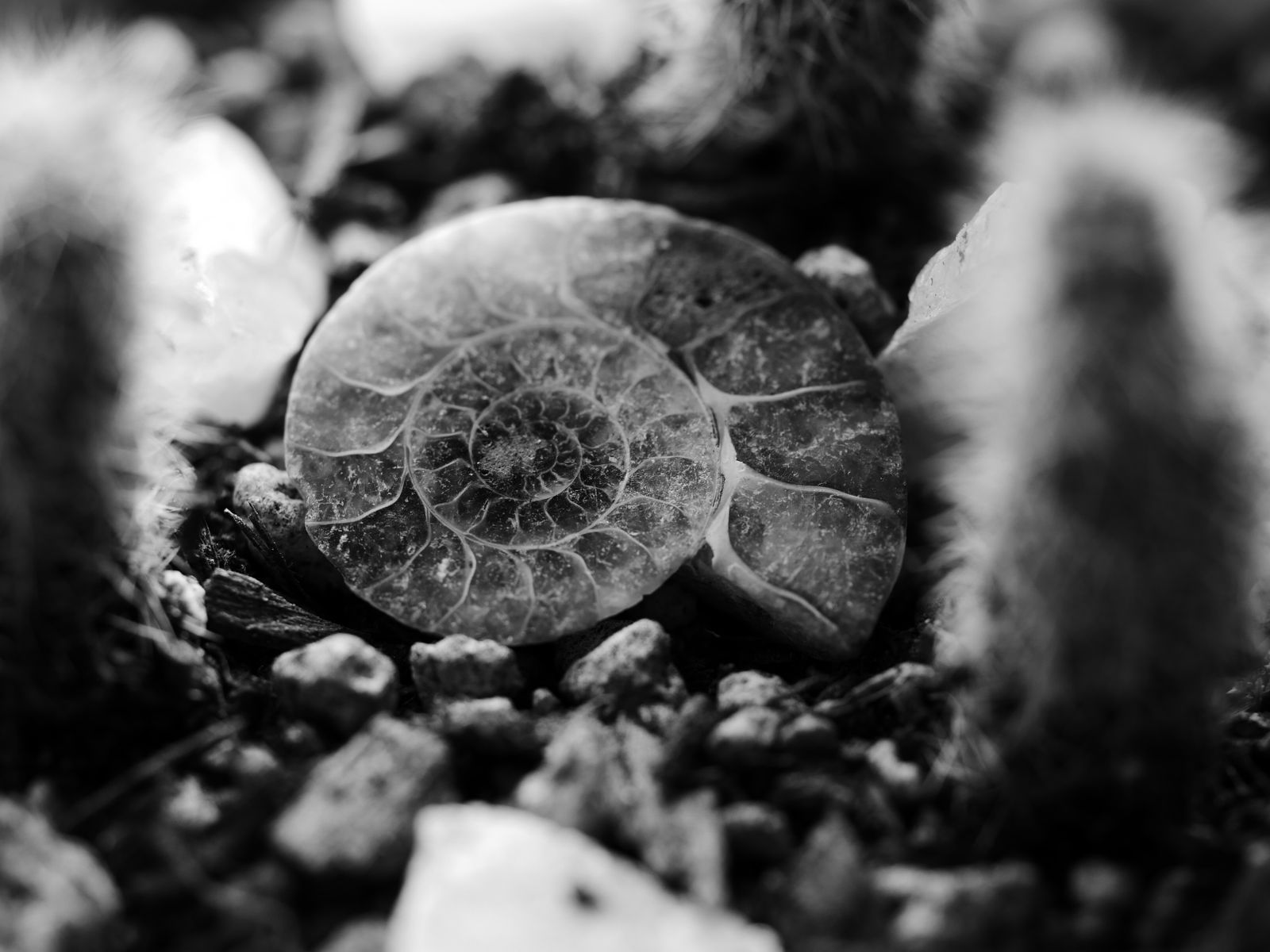
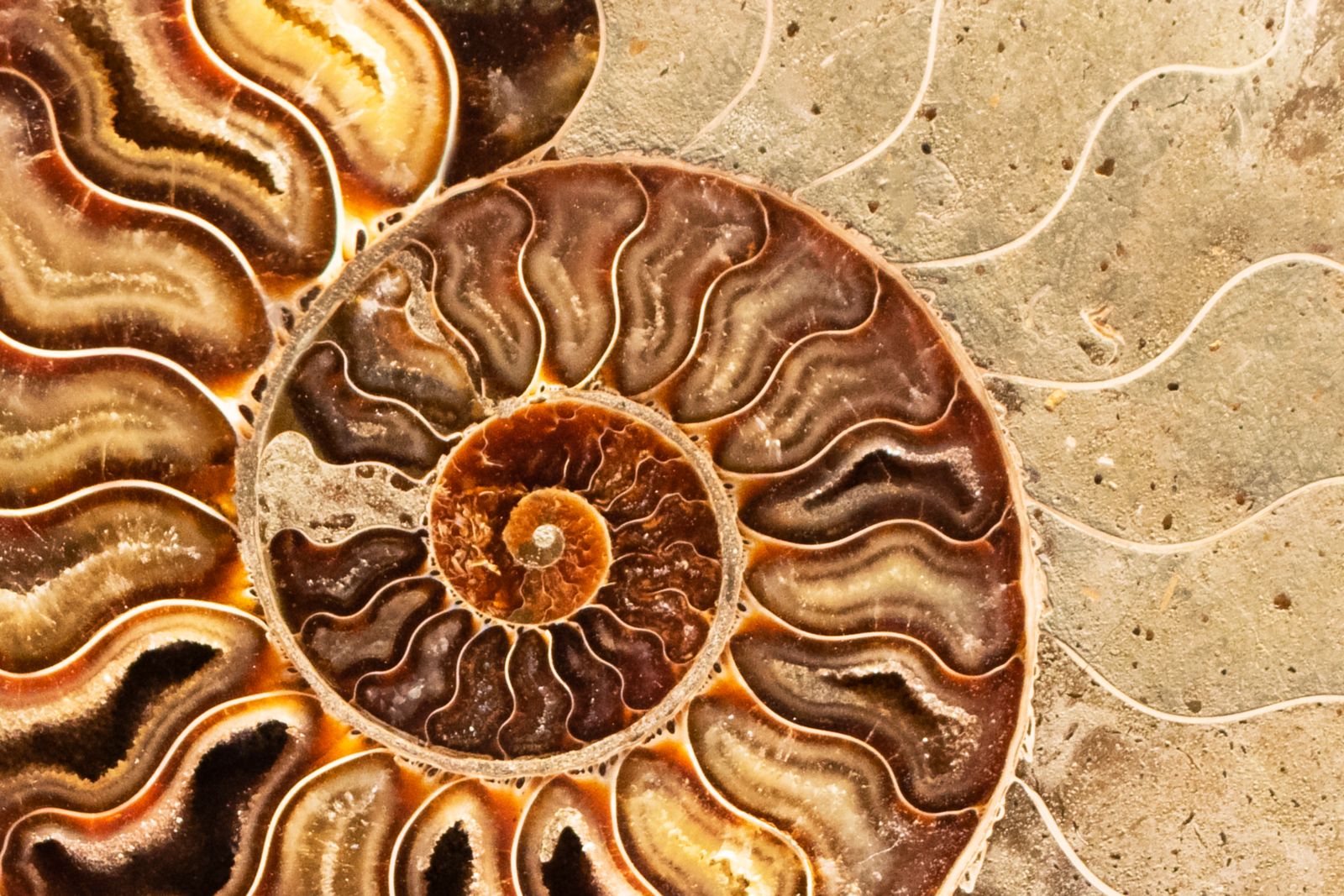
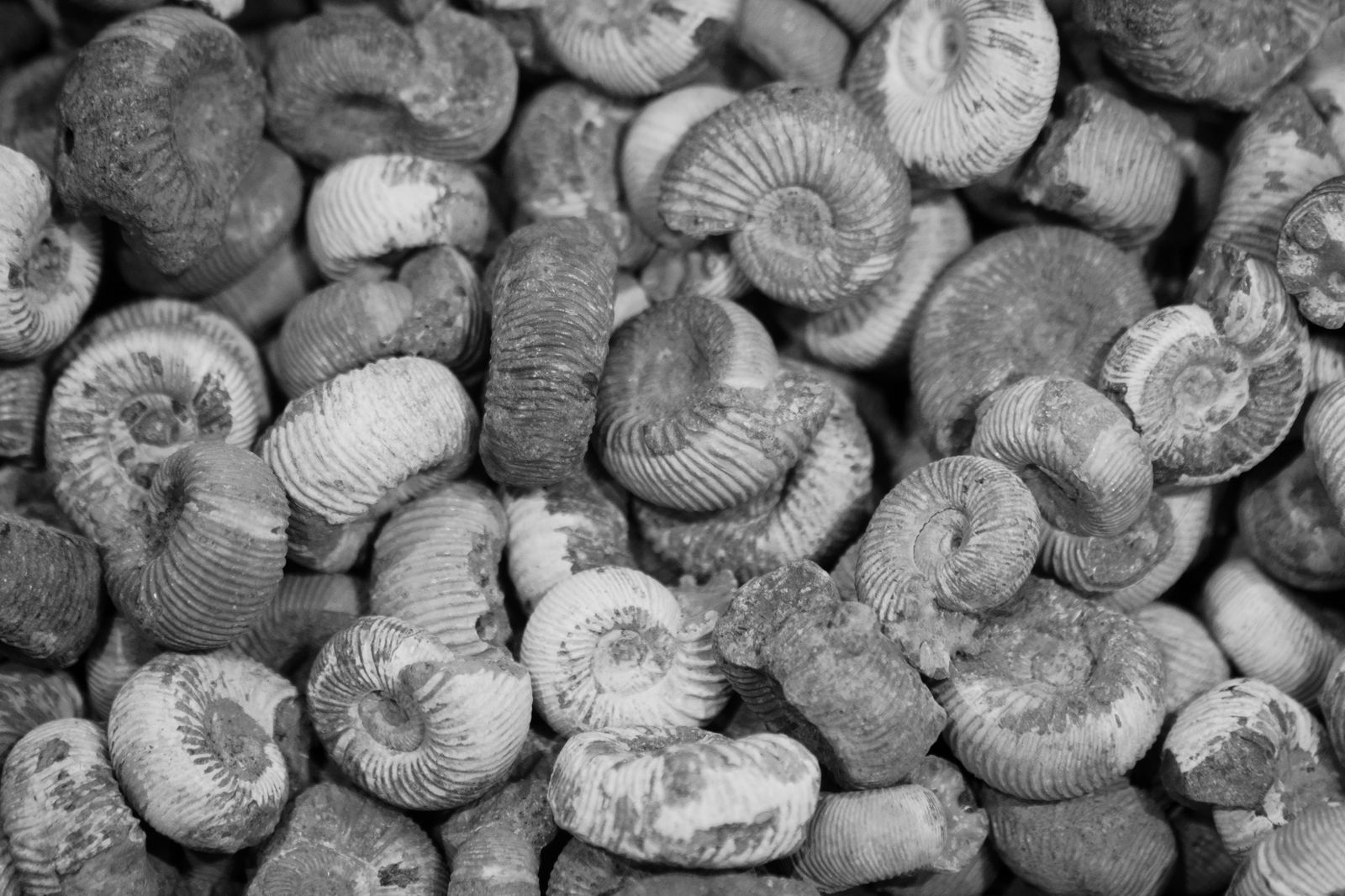
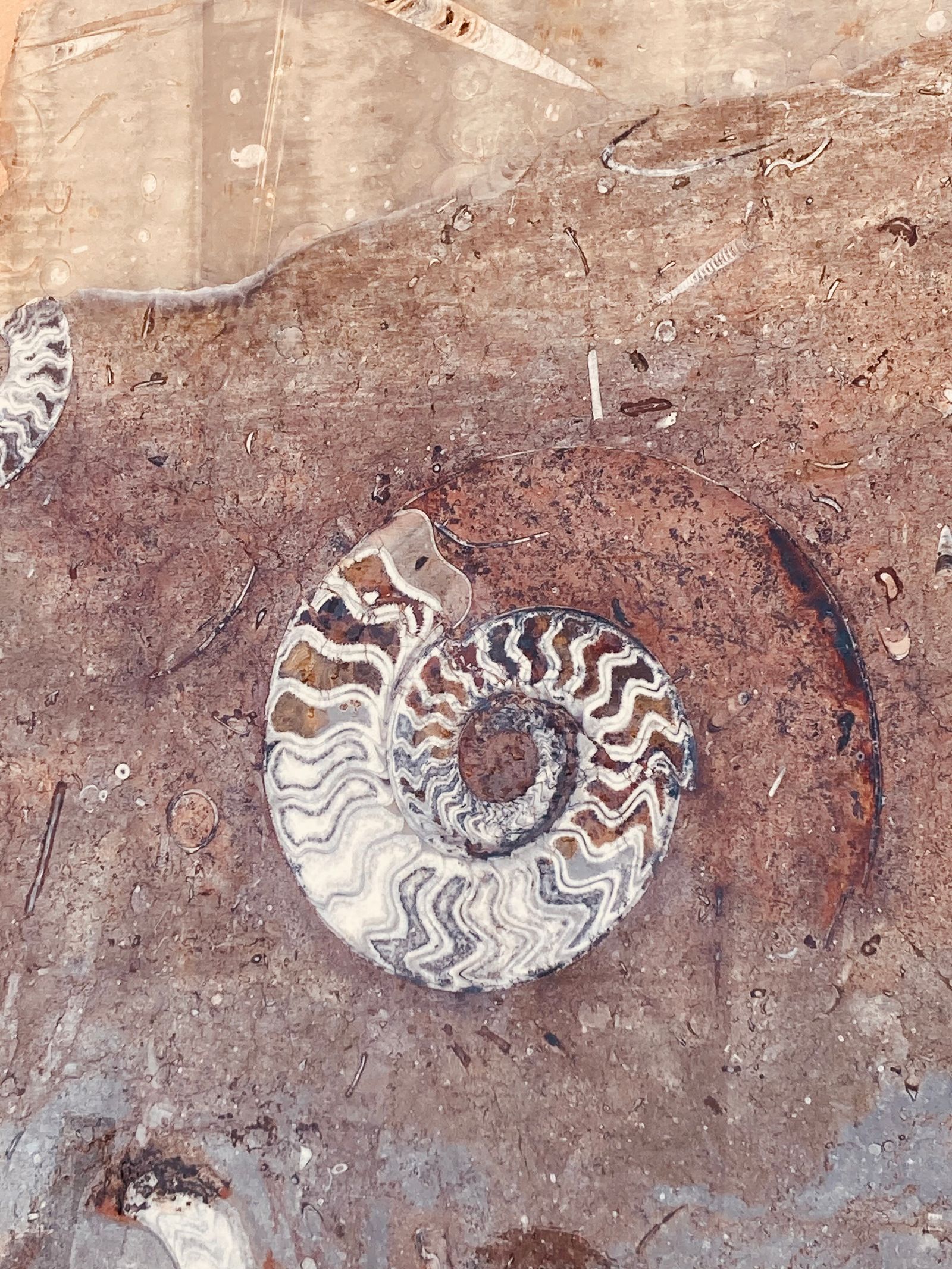
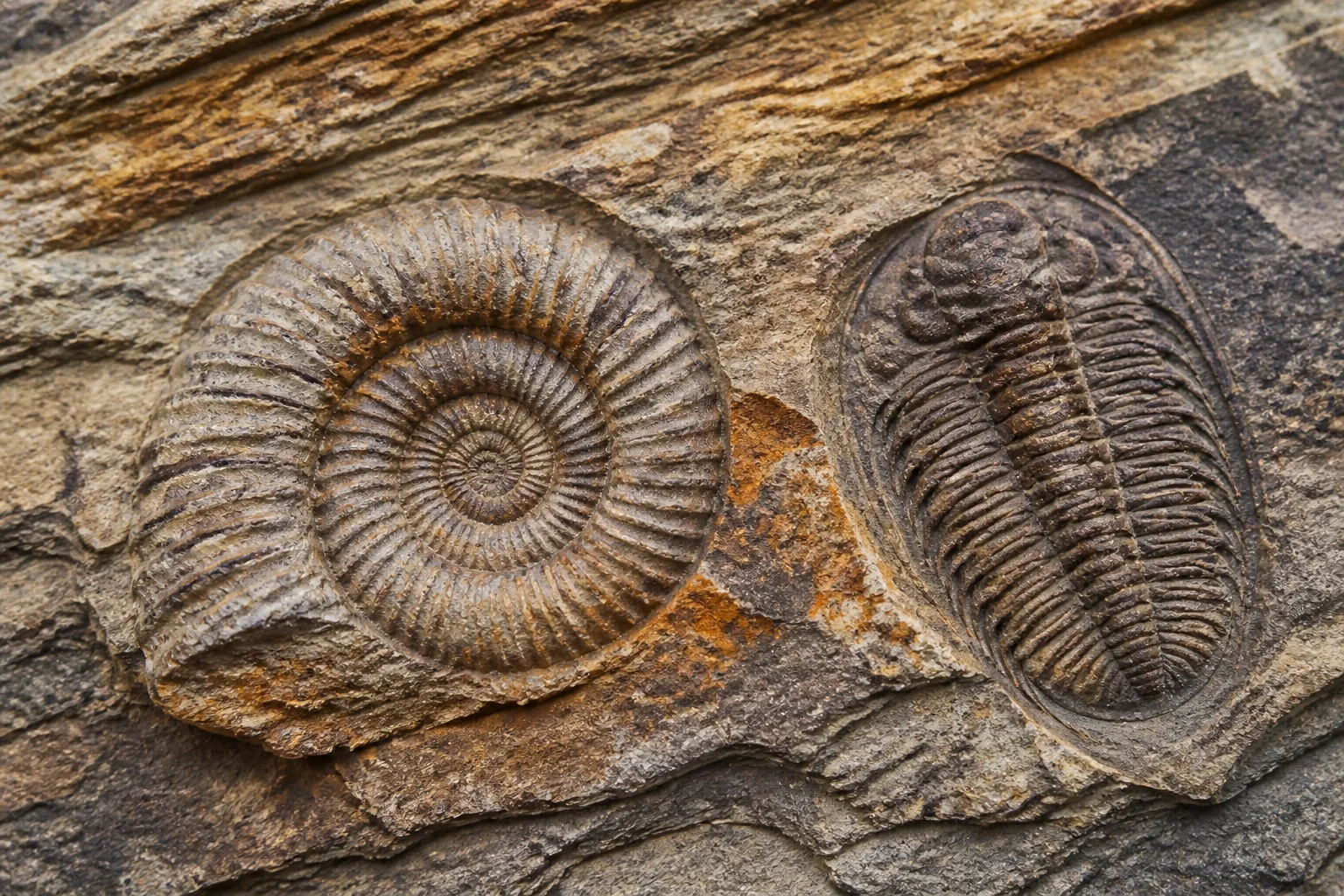
Ancient marine creatures possess distinctive geometric symmetries that stand out sharply against chaotic mineral backgrounds. Ammonites appear as tightly coiled spirals divided into internal chambers that decrease in size toward the center, resembling stone snails carved by a meticulous sculptor.
Trilobites require a slightly different search strategy because these armored arthropods usually break apart into segments before fossilization finishes. Look for segmented head shields, rounded tail sections, or ribbed body plates embedded flush against the bedding plane of dark shale.
- Distinct radial symmetry in shell fragments
- Repeating segments in arthropod exoskeletons
- Contrasting mineral colors between fossil and matrix
- Hollow impressions left behind by dissolved shells
- Unusual bumps that reveal internal molds
- Sharp edges of crystalline calcite replacement
Distinguishing Plant Imprints and Shells
Ancient forests leave fragile evidence behind when fronds and leaves press into wet mud, leaving behind thin carbon films that outline every delicate vein. Bivalves and brachiopods present symmetrical hinged shells that often occur in clusters where ancient seabeds experienced sudden mass burials.
Differentiating real biological impressions from mineral dendrites requires careful observation under magnification. Dendrites look like dark, branching fern patterns on rock surfaces, but they form purely through chemical water seepage rather than actual organic matter.
Take time to examine every exposed layer with patience and curiosity, keeping these identification principles close at hand during every outdoor excursion.